

Ranakpur Jain Temple: Exploring Rajasthan’s Marble Marvel
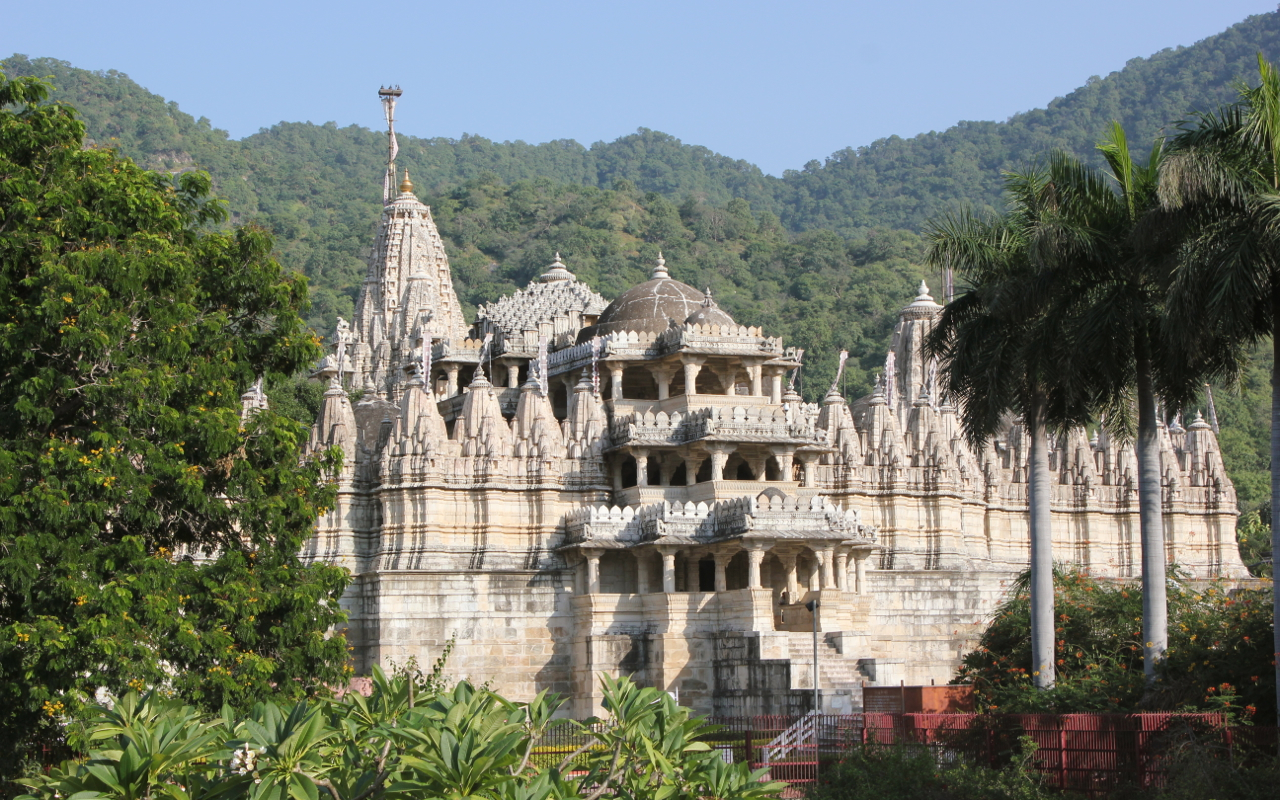
Nestled in the lush valleys of the Aravalli Range, the Ranakpur Jain Temple stands as a testament to the spiritual devotion and architectural brilliance of 15th-century India. Known for its ethereal beauty and intricate marble carvings, this temple is not just a place of worship but a global heritage site that draws thousands of visitors each year. If you are planning a trip to Rajasthan and booking a Udaipur to Ranakpur taxi, the Ranakpur Jain Temple is an essential stop to witness what many call a “symphony in stone”.
The Origin: A Vision in White Marble
The story of the Ranakpur temple begins with a divine dream. In the 15th century, Dharna Shah, a wealthy Jain businessman and minister to Rana Kumbha, had a celestial vision of a heavenly flying chariot. Determined to bring this vision to life on earth, he sought the help of the king and a brilliant architect named Depa.
With the patronage of Rana Kumbha, the town was named Ranakpur, and the foundation of the Jain temple, Ranakpur, was laid. It took over 50 years and roughly 2,500 artisans to complete this massive structure. Today, the Ranakpur Jain Temple remains one of the five most important pilgrimage sites in Jainism, dedicated to Lord Adinath, the first Tirthankara.
Architectural Splendor: A Forest of Pillars
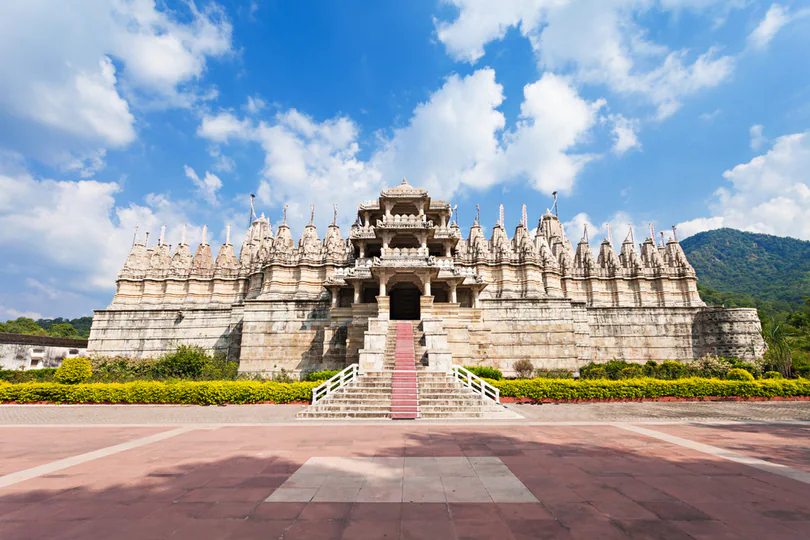
The most striking feature of the Ranakpur Jain temple is its incredible “forest” of marble. The temple is designed as a Chaumukha (four-faced) structure, symbolising the Tirthankara’s conquest of the four cardinal directions and the cosmos.
The Legend of the 1444 Pillars
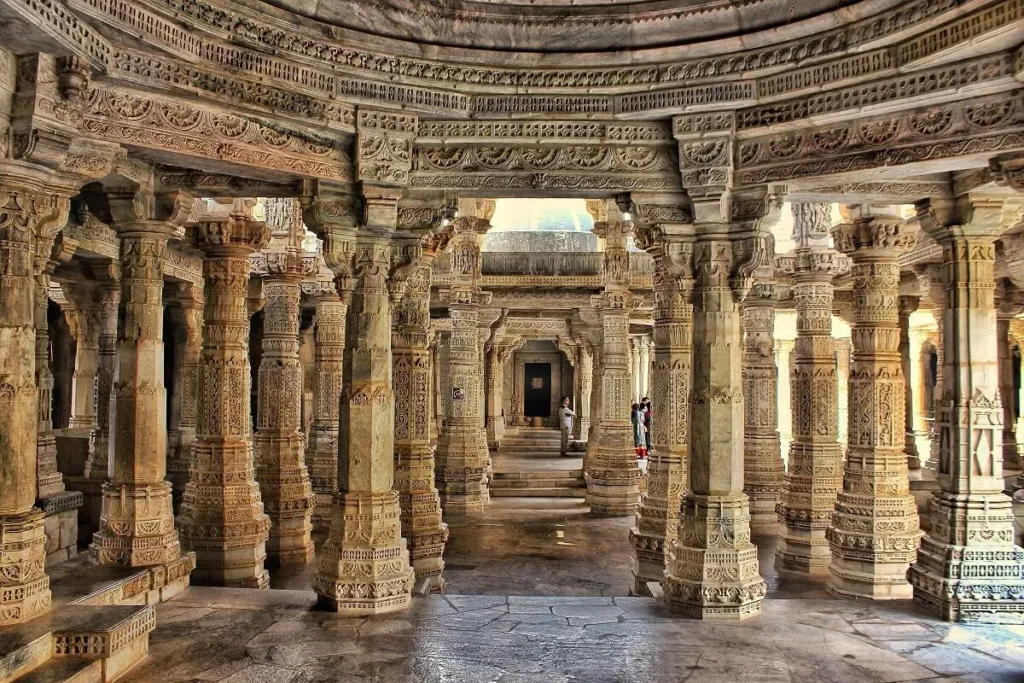
One cannot talk about the Ranakpur Jain temple pillars without mentioning their sheer number and uniqueness. The temple boasts exactly 1,444 marble pillars, and the sheer detail on each one is staggering.
- No Two Alike: It is a widely known fact that among the 1,444 ranakpur jain temple pillars, no two are identical. Each pillar features a different motif, ranging from floral patterns to celestial dancers.
- The View of the Deity: Despite the dense arrangement of the ranakpur jain temple pillars, they are placed with such mathematical precision that they never obstruct the view of the main idol from any corner of the hall.
- A Play of Light: The placement of these Ranakpur Jain temple pillars creates a unique play of light and shadow, giving the temple a different ambiance at every hour of the day.
The Ranakpur Jain Temple Mystery: Unsolved Enigmas
Beyond its physical beauty, there is an air of the Ranakpur Jain temple mystery that surrounds the complex. Local legends and architectural anomalies have kept historians and devotees intrigued for centuries.
- The Counting Challenge: It is said that no one has ever been able to count all 1,444 pillars correctly on their first try. Visitors often find themselves losing track, adding to the Ranakpur Jain Temple mystery.
- The Crooked Pillar: Among the thousands of perfectly aligned columns, there is one intentionally crooked pillar. Legend has it that the architect left it slightly tilted to ward off the “evil eye” and to acknowledge that only the Divine is perfect.
- The Changing Hues: A fascinating Ranakpur Jain temple mystery is the changing colour of the marble. Depending on the angle of the sun, the white marble shifts from a golden glow in the morning to a pale blue or soft grey in the evening.
- Natural Air Conditioning: The Ranakpur temple was designed with advanced ventilation that keeps the interiors cool even when the Rajasthan sun is at its peak. The airflow through the halls is a marvel of ancient engineering.
Inside the Temple Complex
While the main Chaumukha temple is the star attraction, the Jain temple Ranakpur complex houses several other significant structures:
- Parshvanath Temple: Known for its beautifully engraved windows and stone carvings.
- Surya Temple: Dedicated to the Sun God, featuring a circular structure and a chariot driven by seven horses.
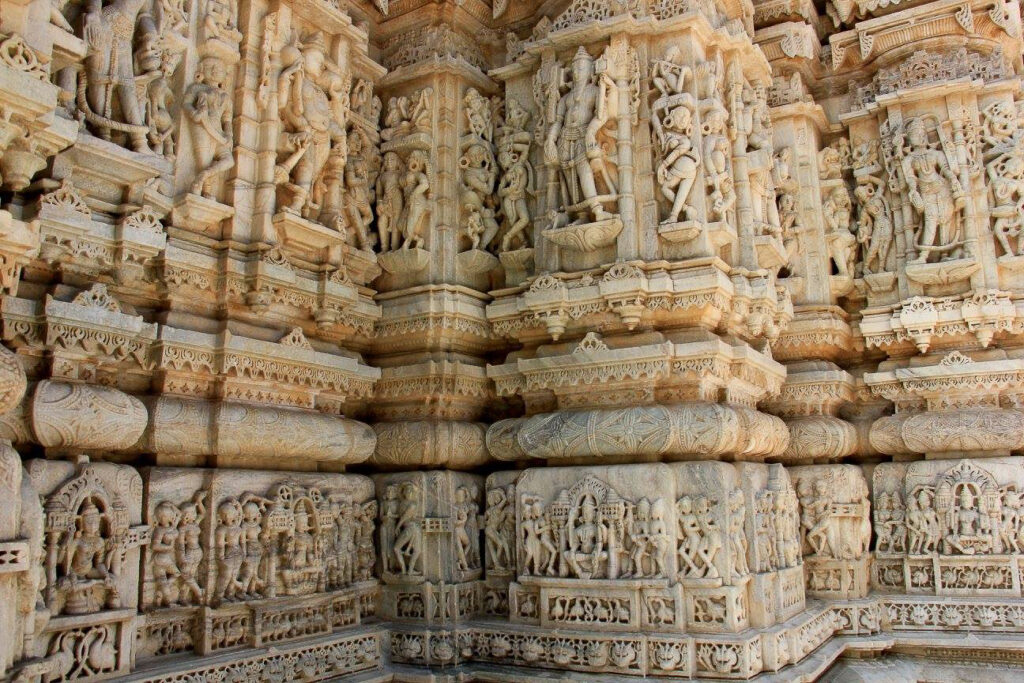
- The Kalpavriksha: Look for the carving of the “Wish-Fulfilling Tree” made from a single slab of marble. It is an exquisite example of the craftsmanship found at the Ranakpur Jain Temple.
Travel Guide: Visiting Ranakpur
If you are planning to explore this marble marvel, here is what you need to know:
Best Time to Visit
The best time to visit the Ranakpur temple is between October and March. The weather is pleasant for walking through the vast marble halls.
How to Reach
- By Road: Ranakpur is located about 95 km from Udaipur and 160 km from Jodhpur. It is a popular stopover for those travelling between these two cities.
- By Rail: The nearest railway station is Falna (approx. 35 km away).
- By Air: The closest airport is Maharana Pratap Airport in Udaipur.
Important Rules and Etiquette
The Jain temple Ranakpur is a sacred site with strict rules:
- Dress Code: Visitors must wear modest clothing. Shoulders and knees must be covered.
- Prohibited Items: No leather items (belts, wallets, or bags) are allowed inside.
- Photography: Cameras are allowed, but you must purchase a photography permit at the entrance.
- Timings: Tourists are generally allowed entry after 12:00 PM (after morning prayers).
Why Ranakpur Should Be on Your Bucket List
The Ranakpur Jain Temple is more than just a historical monument; it is a spiritual experience. Whether you are drawn by the Ranakpur Jain temple mystery, the architectural genius of the Ranakpur Jain temple pillars, or the serene atmosphere of the Aravalli hills, this “Marble Marvel” offers a sense of peace that is hard to find elsewhere. If you are planning a visit, hiring a reliable taxi service in Udaipur is the most comfortable way to reach this secluded masterpiece.
The Ranakpur temple reminds us of a time when art and faith were inseparable. Every inch of the Jain temple, Ranakpur, tells a story of patience, precision, and devotion. As you walk through the cool marble corridors, you aren’t just looking at history—you are stepping into a dream that was turned into stone 500 years ago.